Month: September 2013

Talk and Book Signing at Lion Brand Yarn Studio October 24

UPDATE: This event is now open for RSVPs!

Save the date, NYC! I’ll be returning to the Lion Brand Yarn Studio on October 24th for a special Huge & Huggable event.
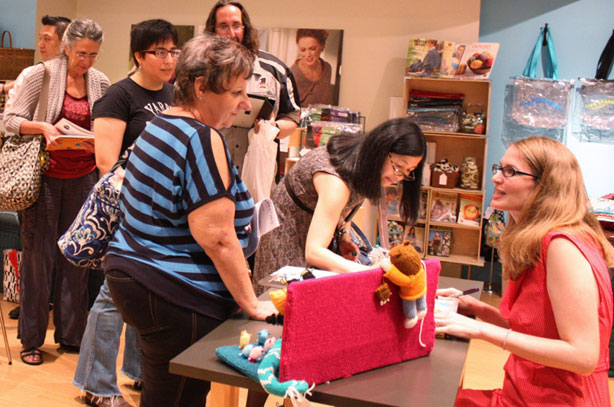
lbys_signing

At 6pm, come meet some of the mega mochis from my new book, Huge & Huggable Mochimochi! I’ll also give a talk about how I went from knitting teeny-tiny hotdogs to knitting a giant hamburger that could eat your placemat for breakfast, and I’ll discuss the design process that went into my hefty new friends.

Books will be available and I I’ll happily sign yours if you like.

This event is free, but you have to RSVP to attend!

PLUS I’ll be teaching a class on toy design at the Studio on Sunday, October 27th. Contact the Studio to sign up!
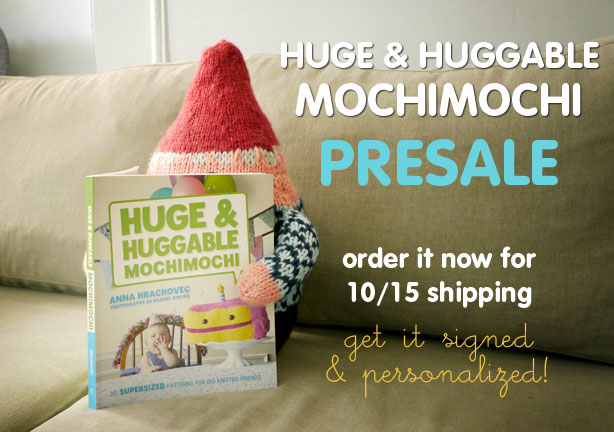
Huge & Huggable Mochimochi Now Available for Preorder!

hhpresale1

Be one of the first to get your hands on my new book! Huge & Huggable Mochimochi contains 20 all-new patterns for super-squishy supersized knitted toys, from a giant squid to a monster truck to a family of capybaras. (The pattern for Jumbo Gnome isn’t included, but he was the inspiration behind the book, so he gets the first look!)

All preordered copies will ship on October 15th, the publication date.

Personalize it! Leave a note when checking out to get your book personalized to whomever you please! (Or send an email to shop@mochimochiland.com.)

I’m so excited for this book, and I can’t wait for you to see it too and start knitting mega mochis!

Huge & Huggable Mochimochi Preview: Roland the Roly Poly

Do you know what today is?? Today is the day that I’m sharing the first of three sneak peeks from my upcoming book Huge & Huggable Mochimochi!

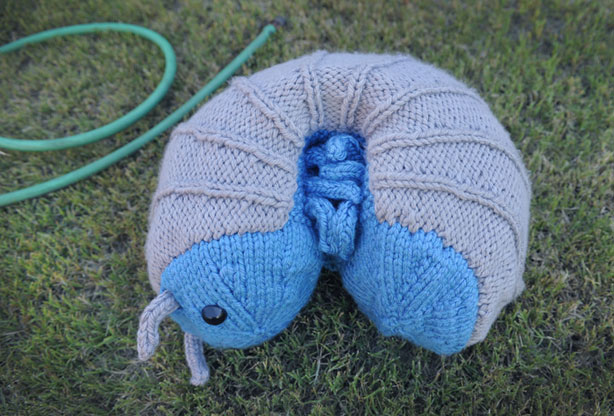
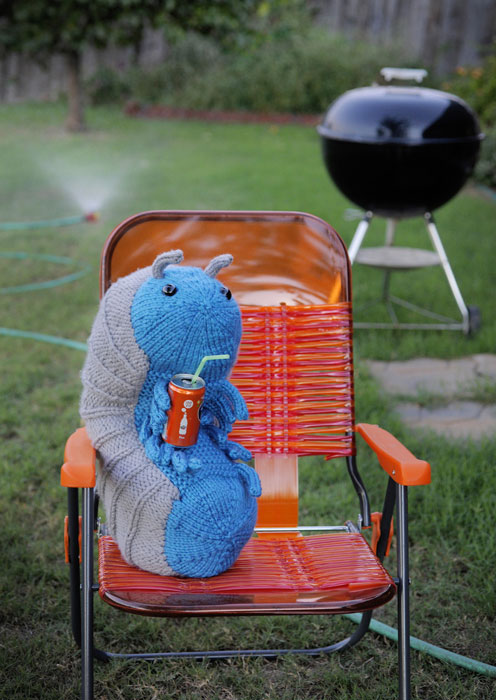
It was tough to choose what to show you, but I can’t say no to this guy: Roland the Roly Poly!

hhmmpre1a

Roland is done with a life of hiding under rocks and is ready to let it all hang out. In fact, he’s hanging out in my parents’ backyard! (There are many perks to having your photographer live across the street from your parents.)

This guy is hands-down one of my favorite jumbo mochis from the book. There’s just something about all his legs, and the ridges on his shell, that make him extra squishy and huggable! He knits up quickly using Lion Brand Hometown USA yarn.

As you can see in this project, the bigger size of the toys in this book meant that I could incorporate many design elements that were new to me. I loved figuring out how to get the ridges on Roland’s shell just right and how to give his body that stylish curve.

Speaking of curves, even this free-spirited roly poly lets instinct get the best of him sometimes…

hhmmpre1b

The great photography is by the brilliant Brandi Simons, who has done the photos for all of my books. We had even more fun with the photography for this book than previously— the scale of the projects meant that we could really place the toys in the world and their mere presence made for hilarious images.

Another reason that I wanted to share Roland with you all is because I’m fascinated by the distribution of roly polys, or pill bugs, and what people call them. I grew up playing with them in Oklahoma, but my husband, who’s from New Hampshire, had never seen one in his life until recently!

hhmmpre1c

So I’d like to conduct an informal poll:

1. Do you know what this creature is?
2. If so, what do you call it?
3. Where do you live?

Let us know in the comments!

hhmm_coversm

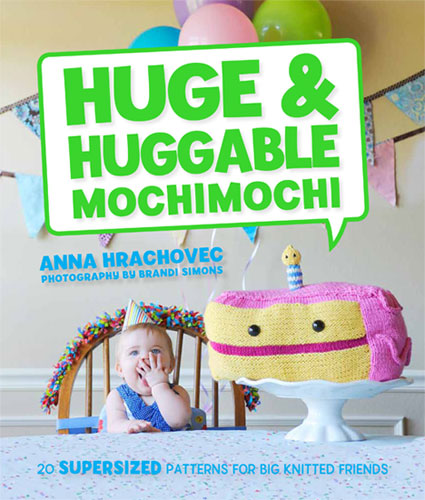
Huge & Huggable Mochimochi comes out on October 15th! The book contains 20 all-new patterns for supersized knitted toys with equally big personalities. You can preorder a signed copy right now, and it’s also available for preorder at Amazon. Or buy it from your local yarn store on the 15th!

Erika’s Operatic Mochis

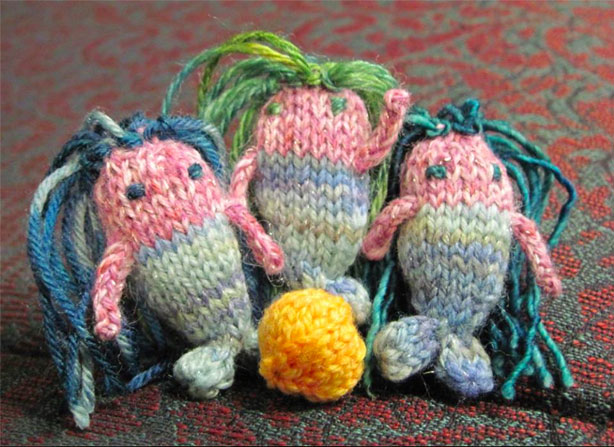
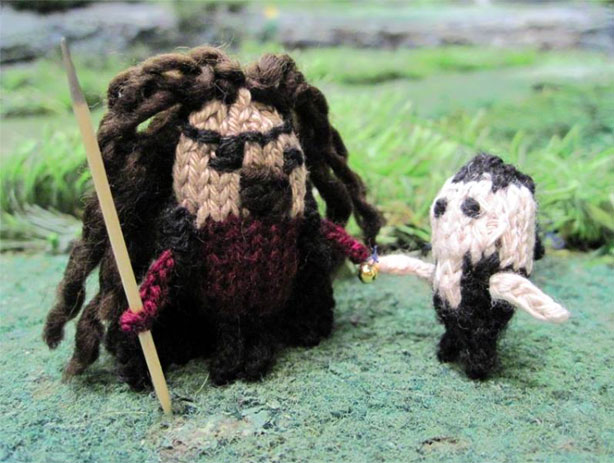
Erika is a carpenter for the Seattle Opera, and she’s also a mochimochi knitter! During rehearsals for Wagner’s Ring Cycle this July, she knitted up mochi-fied characters from the opera, using the patterns from Teeny-Tiny Mochimochi as a starting point.

ringopera1

Who could resist these three lovely Rhine Daughters and their magic gold?

ringopera2

Wotan and Alberich struggle over a certain magic circlet of gold.

ringopera3

Siegfried and Fafner rehearsing the big fight scene!

You can see more, plus fun lego scenes from another crafty opera fan, at the Seattle Opera Facebook page. (And get a glimpse of Erika’s construction work at the homepage!)

Official Guide to Hunting for Needles

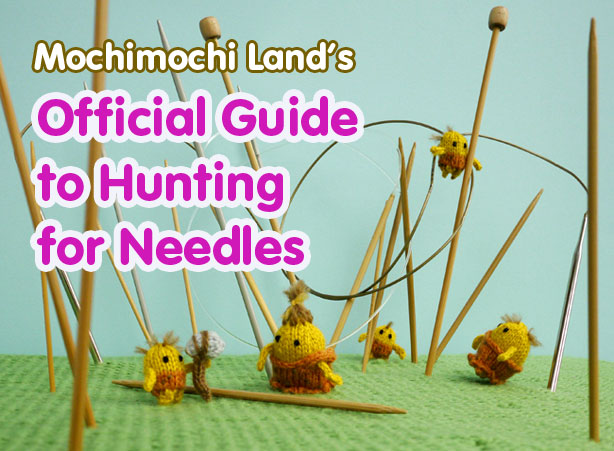
Circular or double-pointed? Metal or wood? How big and how long? Choosing the right knitting needles for your project can be tricky, especially when it comes to knitted toys. So I’ve put together this little guide to break down the choices for you and share my own preferences.

needleguide1

Skip a size (or 3)

The number-one needle rule when knitting toys: choose a needle that is 2-3 sizes smaller than what is normally recommended for the type of yarn you are using. This is so that you will have a tighter than usual gauge, which will prevent the stuffing inside your toy from showing through between the stitches. (Nobody wants unsightly stuffing to show!)

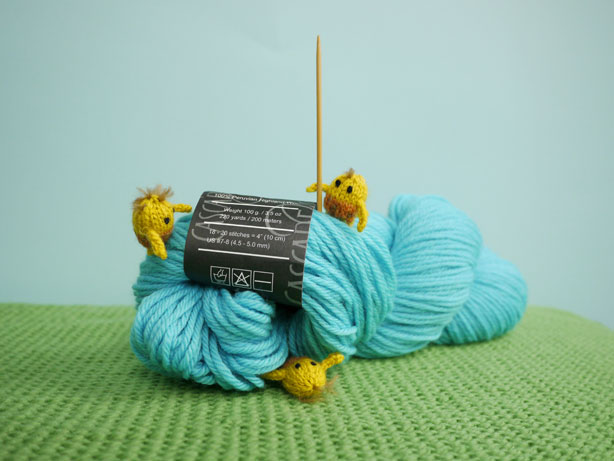
Most yarn comes with a recommended needle size on the wrapper when you buy it. (The Craft Yarn Council also has a chart showing recommended needle size by yarn weight.) Whether you’ll have better results if you go down 2 sizes or 3 depends on your personal knitting style—some people naturally knit more tightly than others.

needleguide2

The good news is that, unless you’re knitting a toy that has a wearable aspect to it, or you have some other reason for wanting a toy to be a particular size, you don’t need to check gauge, and you can use pretty much any type of yarn—with the appropriate-sized needles, it’s going to be adorable!

Now that you’ve figured out what size of needles to use, let’s talk about what type to use.

Double-Pointed Needles (DPNs) do the small stuff

I knit the vast majority of my toys on double-pointed needles, which look like what they sound like: needles with points on either end.

Double-pointed needles (DPNs, for short) have a lot of versatility, but they’re best for knitting pieces with small circumferences—anything from tiny tubes to tube socks. The most common way to use DPNs is to have 3 of them holding your stitches in a triangular configuration, and to use a fourth needle to knit with. (It looks way more complicated than it is—check out my DPN tutorial if you’re new to them.) DPNs are also essential for knitting I-cords, a technique that I use frequently in my designs, and you can also use them for knitting small flat pieces.

needleguide3

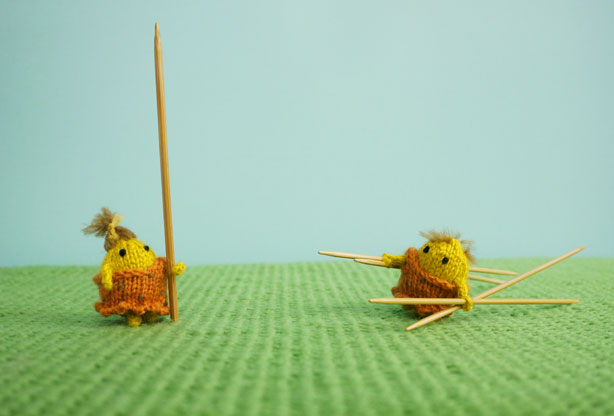
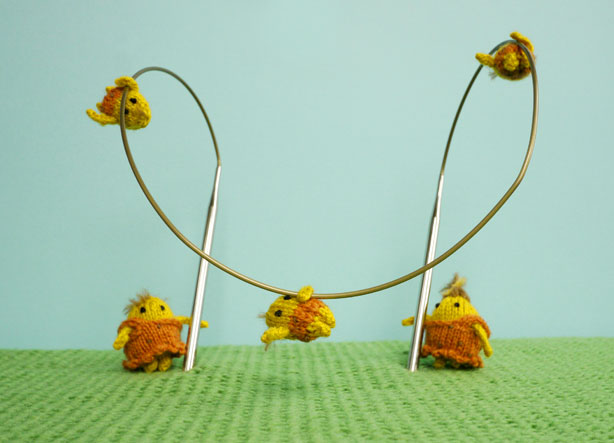
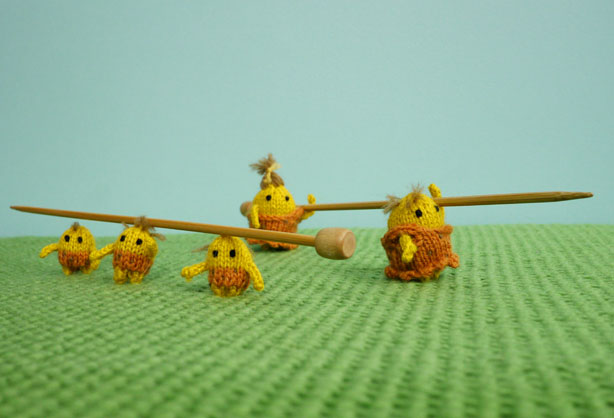
The number-one mistake that people make when using DPNs for the first time: choosing DPNs that are too long and too heavy. The length of DPNs you should use depends on how the size of a project you’re working on, but as a general rule, you should use shorter, lightweight DPNs. Especially when knitting tiny toys, your DPNs should be no longer than 5″ (12.5cm). The longer (and heavier) the needles, the more likely that they will accidentally flip around (twisting your stitches in the process) and get tangled with your yarn.

As for what the needles should be made of, my own preference is for bamboo or wood. I like the weight and flexibility of those materials, and their smooth-but-not-slippery quality makes knitting easy and makes it less likely that your stitches will slip off the needles by accident.

Basically, you can knit all but my very biggest designs using just DPNs. But there are reasons why you may often want to use a circular needle instead.

Circular Needles wrangle your stitches

A circular needle is like two double-pointed needles that are connected together by a long cable, which is usually made of plastic. Because you can fit lots of stitches onto that cable, a circular needle is ideal for knitting pieces with larger circumferences, like the toys in my upcoming book Huge & Huggable Mochimochi. The configuration of the stitches on a circular needle is simple: you knit from one end of the needle to the other in a continuous spiral.

needleguide4

A circular needle can also be used for almost all projects that you would normally use DPNs with. The magic loop technique allows you to knit smaller pieces without DPNs, which is a good option for portable knitting and for people who simply don’t like using DPNs. And one final use for a circular needle: knitting any big, flat pieces. (Many knitters prefer using a circular needle to the traditional pair of straight needles.) Basically the only thing that a circular needle can’t do well is I-cord.

Choosing the right length of circular needle can be tricky, but keep in mind that if you know magic loop, you’ll never have the problem of too long a needle. A very long needle can be cumbersome, though, so I wouldn’t usually recommend the longest sizes available, nor the shortest. A needle that is 24″-40″ (70cm-101cm) will work for most projects.

I have less of a preference when it comes to the materials of my circular needles: I use both metal and wood, and both have served me well. There are also interchangeable sets available if you use them frequently. (Myself, I just have a tangle of different sizes crammed into a drawer.)

Straight Needles shine with intarsia

The conventional pair of knitting needles is something that you’ll rarely see in my hands. They’re probably still the best tool for beginners learning to knit, and I like to use them when I’m knitting medium-sized pieces that incorporate intarsia color knitting. This is because with intarsia knitting it’s important that your stitches are evenly spaced along the needle. But you can also use a circular needle whenever straight needles are called for, so I suggest skipping the straight needles unless you’ve already got them.

needleguide5

I think I’ve covered all the major needle know-how, as it applies to knitting mochis. Please leave a comment if you have a question that I didn’t cover, or if you have some advice of your own that you’d like to pass along!